The Murder of Edwin Pratt

In 1969, Edwin T. Pratt was a civil rights leader and the Executive Director of the Seattle Urban League. Most considered him to be a very intelligent, fair, decent human being. Somebody disagreed. On the night of January 26th, Ed was shot to death in the doorway of the Shoreline home he shared with his wife, Bettye and their daughter, Miriam.
He was 38. Nobody has ever paid for the murder. At the end of the 60's, Pratt pushed hard for school and workplace desegregation, the de-ghettoizing (his words) of neighborhoods, and an end to police harassment. (still goes on) He had a lot of biracial support, but there were of course haters. They sent angry letters, left threatening messages, and got up at public meetings to tell him he'd be killed. Ironically, fellow African-Americans were the most resentful. Some of them thought he was caving to the white man. They had issues with him having white employees and they surely would have rioted had they known Ed was having an affair with his white secretary. His wife knew about the affair and she too threatened to kill him if he left her. Ed was supposed to meet his mistress the night of the 26th but heavy snow stranded him at home. As Ed was sitting in a chair watching TV, he heard snowballs hitting the side of the house at 17916 1st Ave. NE. Betty was putting five-year-old Miriam to bed.
Pratt home, morning after murder

Ed opened his front door and saw two men under his carport. He asked who was there. Bettye was peeking out Miriam's bedroom window when she saw one of the men had a shotgun. Before she could warn Ed, she heard the blast of the gun. The slug tore through Ed's mouth and lodged in his neck. He fell back into the house and died almost instantly. Miriam was still awake. Witnesses reported seeing two men, both about six feet tall and in their late teens or early twenties, flee the Pratt home and head west onto NE 179th Street, where they jumped into a car and sped away. One neighbor told police that he thought the car was a two-toned newer model Buick Skylark. Because of the darkness nobody was able to tell whether the assailants were white or black. Thursday, January 30, 1969, was declared a public day of mourning for Edwin Pratt. All flags were flown at half-staff and a $10,500 reward was set up by several local businesses. Richard Nixon even sent Bettye a hand-written letter. There was a public memorial service for him at Saint Mark's Cathedral at 1245 10th Ave. East on Capitol Hill.

St. Mark's

The FBI also joined the investigation. After three and a half months, they were at a standstill. Detective Sergeant Gordon Hartshorn of the King County Department of Public Safety said "There's nothing to go on. Nothing. It's the most frustrating homicide I've worked on in my 14 years on the force."

Pratt Park

In 1976 a park was built and named for Ed at 1800 S. Main St. From the park, you can see all the way across Puget Sound to the Olympics.  It's in the neighborhood Ed wanted to de-ghettoize so badly. (hasn't happened) For the next 20 or so years, no new solid evidence or progress was made in the investigation. In 1994, journalist David Newman took an interest in the case and requested that the files be released under the Public Disclosure Act.
View from Pratt Park

Newman, along with former investigators, Pratt's daughter Miriam, and County Councilmen Larry Gosset, Larry Phillips, and Ron Sims were also petitioning the King County Police Department to release the files. After King County only granted a partial release of the files, excluding key documents and interviews with suspects, Newman filed a lawsuit against the county. A judge released the files to him. Newman's investigation into the murder led him to question how well the police handled the case. One officer reportedly told him, "I was unprepared for handling the homicide of a prominent person. In fact, this was my first homicide." This officer was the first to arrive at the scene. The crime scene was so poorly and improperly secured that it's used as a training scenario about potential mistakes in controlling a crime scene by the Sheriff's Department. On the night of the murder, a hundred or so police, firemen and neighbors wandered freely around the Pratt property, right through the middle of the crime scene. The closest police have come to solving the Pratt murder was a theory presented in a 1994 Seattle P-I article. They wrote that in 1970, Sergeant Hartshorn had a suspect in mind but that he had been killed. The suspect was Tommy Kirk, a 21-year-old drug user, dealer, and all around loser.
Tommy Kirk

Dan Raley, another reporter from the P-I met with Steve Butler, a former convict, recovering heroin addict, and acquaintance of Tommy Kirk. Butler said that Kirk, a guy named Texas Barton Gray and one other man had been hired by black construction contractor Henry Roney to kill Pratt. Supposedly, the contractor was angry at Pratt's efforts to integrate blacks into the workforce. Allegedly, Kirk fired the gun, Gray accompanied him, and the other man drove the getaway car. In May of 1969, Gray shot and killed Tommy in his car, at the corner of Boylston and Republican on Capitol Hill after an argument over a drug debt. Gray died in prison of a heart attack in 1991.
Boylston and Republican

Mike Jordan, the man Butler named as the driver said in an interview with the P-I that he had heard Kirk was Pratt's killer and understood how he could have been implicated in the crime. "I had a Buick GSX; it was yellow and black. That kind of car was seen in the neighborhood when this happened." He said that police had examined his car, but apparently found nothing. He died in 2006. Kirk's name had also surfaced in the investigation in 1974, when a man told detectives that on the night Pratt was murdered, Kirk showed up at his house with a shotgun and admitted to killing Pratt. The man, who passed a polygraph test, said that the gun was hidden in a Queen Anne storage locker. When cops searched the locker, no gun was found. Considering most of the players are all dead now, Edwin Pratt's murder will probably never be solved. Most people involved with the case feel Tommy Kirk was the killer. If so, karma got him that day up on Capitol Hill. RIP Ed.

Here is the house today

The Bus Tunnel Beating


On January 28, 2010 a group of 10 teenagers began to argue with 15-year-old Aiesha Baker inside the downtown Nordstrom at 500 Pine Street in Westlake Plaza. They even threatened to kill her. 
Nordstrom on Right, Mall on Left
They were asked to leave by security officers and they all left through the west entrance onto 5th Avenue. Aiesha went across the street to Westlake Mall and took the elevator down to the bus tunnel. The group followed her. Aiesha sensed trouble so she made a point to stand next to three security guards, thinking they would protect her. Well, they didn't. A 15-year-old girl pushed Aiesha to the ground and began kicking her in the head and body.
Aiesha getting kicked in the tunnel
She was then picked up and thrown into the bus lanes. The security officers called the police and watched the girl get pummeled. Aiesha's purse, ipod, and back pack were all stolen. According to a news release from the King County Executive Office, the transit tunnel security officers who witnessed the assault didn't help the girl because they're unarmed employees of Olympic Security Services who are trained to avoid confrontations or fights and instead call 911. (Seems to me like they're a waste of money then. Anybody down there with a cell phone can call 911) The main attacker was arrested February 5th and was charged with second-degree assault and first-degree robbery. Three more suspects were arrested on February 6th-Latroy D. Hayman 20, Domanique L. Whitaker 18, and Tyrone J. Watson, also 18. They were all charged with first-degree robbery. The city was of course in an uproar over a poor, innocent girl being attacked while grown men just stood by. Aiesha even gained national attention when she went crying to Good Morning America with her story. 
Well.....there's more to the story than she told. A lot more. Some say it was karma intervening. On May 23, 2009 Tamie Cox, 50 was walking home from a pub on Highway 99 up in Edmonds when two "nicely dressed and polite girls" stopped and asked her for the time. When Tamie pulled out her cellphone to check, the girls jumped her. One put her in a head lock and yanked at her hair while the second girl punched her in the face and chest and grabbed her purse. After the attackers ran away, Tamie chased after them. Once they ran into a dark alley, she decided not to press her luck. She ran back out to the highway and flagged down a police officer. Somebody else had already called the cops and the two suspects were in the back of another squad car. You guessed it, one of those girls was Aiesha Baker. On top of that, Aiesha was already on probation for attempted second-degree robbery and assault for attacking a security guard at Saar's Market Place in Rainier Beach  (Seattle's answer to South central) on Jan. 26, 2009. Aiesha punched the guard in the head after he stopped her friend for shoplifting an energy drink and a bag of chips.
Saar's Market in Rainier Beach
In exchange for her guilty plea in the Edmonds attack, Aiesha was ordered to serve four months of probation and a year of community service, attend counseling, have a nightly curfew and refrain from using drugs and alcohol or possessing weapons. (So really, she wasn't punished at all) Aiesha's adult attackers in the tunnel; Hayman, Watson, and Whitaker, were all sentenced to  six months in jail. The 15-year-old girl was sentenced to 36 weeks in Juvenile Detention. I'd love to tell you this is the end of the story but on December 23, 2010 Aiesha was attacked again. According to court documents, around 9:30pm Aiesha and a friend were waiting at a bus stop near the Westlake Plaza Macy's at 3rd and Pine when they were approached by Alleicia Carson, 20 and two teen girls. One of those girls, then 16, was Aiesha's primary attacker in the bus tunnel. The other juvenile girl was identified as the sister of one of the men convicted of the tunnel beating.
Bus Stop with Macy's on Left
According to witnesses, Alleicia saw Aiesha and asked the 16-year-old, "Isn't that the bitch you beat up in the tunnel?" The three surrounded Aiesha and her friend, spit on them, pulled their hair and called them "snitches." The group was still fighting when officers arrived. Alleicia, who had previously been charged with attempted theft in 2006, plead guilty and was given only a suspended sentence and probation. My advice to Aiesha, on top of the obvious, is to stay away from the plaza. She lives closer to SouthCenter Mall anyway. 
The Bus Tunnel Today

A Shootout in Magnolia

Sadly, this won’t be my last post about a murdered Seattle cop. On the morning of January 14, 1921, Seattle Police Sergeant Edward Herald and Officer Volney Stevens were dispatched from the Ballard Station at 22nd and Ballard Way (The building was demolished in 1967 but the original bell tower is in a park on the site) to investigate a report of some suspicious men at a lookout on Magnolia Hill. (The hill sits on Puget Sound) 
Officer Stevens
The officers rolled up to a car containing four men near 32nd and West Galer St. Herald got out of his car to speak to the men. Creighton Dodge 21, and C.A. Brown 20, jumped out of the car and grabbed him. Stevens exited his police car and engaged the suspects in a gun battle.
Park on old City Building site

Ward Daniels 19, and Louis Madsen 18, exited the suspect’s car and joined the fight. Stevens was hit twice and fell to the ground. The suspect’s car wouldn’t start, so they took Herald hostage and stole his police car. Herald pleaded with the men to take them back to assist Stevens. in 1921, their quickest way off the hill was Dravus Street, a mile and a half north of their location. (Magnolia is a peninsula)
Lookout at 32nd and Galer

They dropped down Dravus but when they got to Elliott Avenue, they were met with an open Ballard Bridge. (Oh, the irony. That bridge is a pain in the ass.) They turned around and went back to the lookout and shoved Herald out of the car next to Stevens. The suspects were definitely painted into a corner. They headed back down the hill toward Dravus but decided to stop at the home of Anna Hundertruaeck at 2340 West Newton. They tried to convince her that they were sick and needed a place to stay. (Oh, OK, no problem) She slammed the door and called the police.
2340 West Newton

The suspects fled that location and made their way south, down to the beach at Smith Cove at the bottom of Magnolia. They stole a rowboat and intended to go downtown. Just as they were shoving off, officers arrived and ordered them to stop and return to shore. Nobody, not even these idiots would be dumb enough to jump into the bay in January. They were hauled in and booked for murder. Officer Stevens died that same day at the hospital.

Smith Cove on Elliott Bay

The four men were implicated in armed robberies in Burlington, Enumclaw, Marysville, Bellingham, and Arlington. Creighton Dodge, wounded in the gunfight by Officer Stevens, died on January 19th. He confessed to having fired the shot which killed Officer Stevens. In February 1921, Daniels, Brown, and Madsen (just babies) were all convicted of Stevens' murder and were sentenced to life in prison at the Big House in Walla Walla. RIP Officer Stevens.

A Murder at Green Lake


Most people who jog or walk Green Lake Trail have no idea what happened on June 17, 1926, between Meridian Avenue and Orin Court. In the early hours of the morning, a carpenter who was walking to work noticed a pair of women's shoes on the bank. As he walked toward the shoes he was shocked to find a woman's naked, dead body. She was 22-year-old Sylvia Gaines.
From the moment her body was found, the Gaines murder case became one of the most sensational in Seattle's history. Sylvia, a graduate of Smith College in Massachusetts, happened to be the niece of William Gaines, the chair of the King County Board of Commissioners. After graduating, Sylvia came to Seattle to visit the father she barely knew. Her parents divorced in 1909 after Bob Gaines, leaving his wife and child behind in Boston, moved to Washington. Bob reported Sylvia missing on the 17th. After her body was found, he identified her at the morgue. When cops questioned him, he was drunk and made statements suggesting he knew who the murderer was. Also, several of Bob's neighbors and friends who saw him on the 16th, said he was “acting strange” after his daughter's disappearance. The press went wild. Anyone who had ever even seen Bob or Sylvia was paid for a story. What they turned up was very disturbing. According to several acquaintances, "unnatural relations" had evidently been going on for most of Sylvia's visit. She and her father hadn't seen each other since 1909, when she was five years old. Sylvia moved in with her father and his second wife, Elizabeth into a tiny one-bedroom house at 108 N 51st Street in the Phinney Ridge neighborhood. When Sylvia first arrived, she slept on the couch in the living room.
108 N. 51st Street
Eventually, she moved into the bedroom and her step-mother was banished to the couch. (Huh?) Neighbors heard the three arguing all the time and in November of 1925, Elizabeth tried to kill herself with a rifle. There were reports of Elizabeth and Sylvia screaming at each other in public. A Seattle patrolman rolled up on Bob and Sylvia late at night parked in his car at Woodland Park on the SW side of Green Lake. "I was just a step or two from the car when I heard a scramble inside,” Officer R.L. Davis said.
Former Wallingford Cop Shop
"I stepped to the left side and I saw a young lady in the left seat. She had her hand on the door. Bob Gaines was in the other seat." The officer asked Bob how old the girl was, and took them to the Wallingford Precinct at 4422 Densmore Ave. N. (It's now a health clinic) They were released when Bob showed that Sylvia was his daughter and convinced them he was doing nothing wrong. An employee of the Arctic Club Hotel at 700 3rd Avenue reported that he had seen Bob and Sylvia together in bed. All of the info the press digging up prompted Prosecutor Ewing Colvin to press charges against Bob Gaines for the murder of his daughter.
Arctic Club Hotel
The trial began on August 2, 1926. Colvin asked for the death penalty. Media and public attention was so intense that the judge ordered the jury sequestered at a Seattle hotel. (I believe it was The Gladstone Hotel at 415 Terrace Avenue just south of the court house. It's a parking lot now) Witnesses were called to testify about the events of the evening of June 16th. They reported seeing Bob at the lake shore around 9pm that evening, near where Sylvia's body was found. “He was bending down over someone or something.” Other witnesses said they'd seen Bob drive around the lake several times about the time of the murder. Sylvia was strangled and her head bashed with a blunt instrument. Authorities found a bloody rock near the murder site. Testimony established that she had been murdered in one spot and that her body had been dragged to another, several yards away. Bob testified that he and Sylvia had argued on the evening of the 16th. Sylvia was angry and left their house shortly after 8pm for a walk around the lake. Bob said he left at about 8:40pm in his car to look for her. He arrived at 9:30pm at the home of his friend and drinking buddy, Louis Stern who lived in a guest house behind 4217 2nd Ave NW. Stern's testimony was damning.
Guest House at 4217 2nd Ave
He said Bob came to his house to drink and all but confessed that he'd murdered his daughter. "Bob said, You know what I have always told you, that if anyone in my house told me when I should come and go and when I should drink and how much, I would kill em? Well, that's what happened." Colvin had established where, when, and how Sylvia had been killed, but he had to provide a motive. His theory was that Gaines and his daughter were having a sexual relationship. Bob knew Sylvia wanted to leave the home. She had even made plans to go stay with her uncle. Colvin said Bob killed Sylvia to keep her from leaving him or revealing the incestuous affair. In his closing statement, Colvin argued that Bob had been sexually involved with his daughter for some months, and that she was fed up and about to leave. On the evening of June 16, they argued and Sylvia left the house to get away from him. Bob went after her, found her walking along Green Lake and killed her. Probably while he was severely intoxicated. Then, to make it look like she'd also been raped, he tore her clothes, dragged her body away from the path and arranged her limbs in a manner to suggest a sexual attack. Colvin reminded the jury that Bob pretty much confessed to the murder at Louis Stern's house. The jury deliberated a little over three hours and found Bob Gaines guilty. A Times reporter described Bob as “icy calm” when the sentence was read, though his brother crumpled onto the press table and sobbed. During sentencing, Elizabeth, seated next to Bob, stayed calm and squeezed her husband’s hand. He was sentenced to die. He appealed his case but was unsuccessful. He was the 25th person executed in Washington on August 31, 1928, in Walla Walla.
Bob Gaines on Death Row
He was buried with full military honors at Evergreen-Washelli Memorial Park in North Seattle. (Veterans who commit heinous crimes are no longer given military burials thanks to Tim McVeigh) Sylvia was cremated and Butterworth Mortuary sent her ashes to her mother in South Lynnfield, Massachusetts. The area where Sylvia's body was found is now called Gaines Point. 30 Cottonwood trees were planted in her honor. By 1999 the trees had grown too big and branches kept falling off.
Gaines Point Green Lake
They were uprooted and replaced with Poplar's. I think there should be a plaque in the area but there isn't. People sitting on the bench or feeding the ducks have no idea that the area is even called Gaines Point. It's kind of a shame. RIP Sylvia.

The Silencing of The Tuba Man

This story breaks my heart. “The Tuba Man” Ed McMichael used to come into the bank I worked at in Ballard. He was the nicest guy and was always in a good mood. At first glance, a lot of people thought he was homeless or even a little crazy. He was neither. He just wore goofy hats and had a scruffy beard. 
He was definitely unique. He loved Seattle and he loved to entertain. He also had credentials. In 1973 he joined the band at North Seattle Community College. He went on to perform with the Seattle Youth Symphony, the Cascade Symphony of Edmonds, and for a decade, he was the principal tubist with the Bellevue Philharmonic Orchestra. A friend of his suggested he take his talents to the streets. His first performance was at the Kingdome on December 23, 1989. It was Steve Largent's farewell game. People waiting in line started putting money in his tuba case and a career was born. I can't remember a concert or a game where he wasn't there. He was like an honorary greeter. He'd sit outside the Key Arena and belt out the tunes of the concert that was happening that night. I swear he knew EVERY song ever written. (You haven't lived until you've heard Black Sabbath on the tuba.) He had a playlist for every event. A crowd favorite outside Mariner games was “Hit Me with Your Best Shot” by Pat Benatar. If the Seahawks lost, we’d all walk back to our cars listening to “Chariots of Fire.” Rain or shine, he subjected himself to the elements because he knew how much everyone enjoyed it. Unfortunately, on October 25, 2008, The Tuba Man was silenced. Five loser thug teenagers attacked Ed at a bus top at 5th and Mercer in front of Channel 9. They smashed his head against the pavement and robbed him of his wallet and ring. A cop happened to drive up to the scene as it was happening.
Bus Stop at 5th and Mercer
Two 15 year-old's were arrested on the spot and the stolen ring was recovered. Police began searching for the three who fled while Ed was transported to Harborview Medical Center. For one of the teens, Billy  Chambers, it was his second crime of the night. He had already robbed a man at gunpoint. As for Ed, he was released a few hours after the attack and returned to his apartment at 2721 4th Avenue. He stayed in bed for a week. 
Ed's Apartment Building
His brother arrived on the morning of November 3rd to take him to a doctor’s appointment. Sadly, he found Ed deceased in his bed, due to his head injury. On Wednesday, November 12, 2008, a memorial was held at the Qwest Event Center and 1,500 people attended. Many of them wore silly hats in Ed’s honor. It was a tough loss for Seattle. Walking into events now just isn’t the same. I’m bummed for the people who’ll never get to experience him.
Inside The Memorial
Only three of the five teens would be charged with manslaughter. There were several witnesses at the bus stop but they refused to testify at the trial. Billy, along with Kenneth Kelly and Ja'Mari Jones were all tried as juveniles. They each received only 36 to 72 weeks in juvenile detention and since they’ve been out, two of them have done nothing but continue to wreak havoc on the city. In July of 2010, Billy Chambers and two others were arrested near 6th and Seneca after robbing a pedestrian at gunpoint in front of Crowne Plaza.
Crowne Plaza 6th and Seneca
In February of 2011, Billy was arrested again for armed robbery. While he was being booked he bragged to the police officer that he was one of the teens who killed The Tuba Man. In June of 2011 at 23rd and Jackson, he rear-ended and side-swiped the car of a woman who'd reported him to police for allegedly stealing several items from her car earlier in the year. In October of 2011, Billy was sentenced to 22 months in prison.
23rd and Jackson

We can all expect to read about his latest crimes sometime around August of 2013. Kenneth Kelly was charged with robbery in 2010 and in February of 2012 he led SPD’s Gang Unit on a high speed chase and was found with a loaded weapon. As of April 7, 2012 he is still in jail on $100,000 bail. Not long after his death, someone noticed Ed had purchased a paver tile in front of The Children’s Museum as a contribution. 

It read: THANK YOU EVERYONE FOR ALL THE TIPS. THE MONEY ALWAYS PAID THE BILLS, REDUCED THE DEBTS AND FED THE TUBA MAN. EDWARD SCOTT McMICHAEL. Such a tragedy. RIP Tuba Man.   

UPDATE:  Jan. 2nd, 2013 Bellevue police say Ja’mari Jones was arrested Wednesday night by Lakewood police. The convicted “Tuba Man” killer who’s now accused of gunning a guy down at a nightclub, was taken into custody during a routine traffic stop at 8 p.m. in the 10800 block of Pacific Highway South in Lakewood. Police ran Jones’ license plate and discovered the car, a Toyota Corolla, had been reported stolen from Auburn. Police charged Jones with second-degree murder in connection with the shooting and killing of Deshawn Milliken on Christmas Eve morning. The incident left another man from Renton injured.Bellevue police were notified of the arrest and Jones was transported to the Bellevue Police Department jail. Jones was booked for Murder 2 and is being held on a $5 million bond. His girlfriend was also in the car during his arrest and she was booked for rendering criminal assistance.

The "Hollywood" Bank Robberies

In 1977, 22 year-old Scott Scurlock was fired from a landscaping company in Hawaii for growing marijuana on their property. He decided to move to Olympia, and in 1978, enrolled at Evergreen State College. He studied organic chemistry and biochemistry and learned how to make drugs. 

He eventually rented a farmhouse on 19 acres at 1506 Overhulse Road NW in Olympia, near the college. There was a large barn on the property, which was the perfect place for him to manufacture crystal meth. In the early 80's, he started building a fort between seven cedar trees on the back of the property, using materials he stole from nearby lumberyards. Within fifteen months, Scott and friends had constructed a 1,500 square-foot tree house. Although it never had a building permit, it was three stories high and stood 60 feet off the ground with an awesome view of Mount Rainier.
The Tree House
The house had 30 windows, electricity, plumbing, a full kitchen, a working bathroom, and a fireplace. When the farm was put up for sale in 1990, Scott used his drug profits to purchase the property. That year, his main meth distributor was murdered, and he realized just how violent the drug business was. He stopped manufacturing meth, but needed another source of easy money to support his extravagant lifestyle. He wasn't about to get a 9 to 5 job. The drug money he had would only last him another year, so he decided robbing a bank would be the perfect answer. He chose a close friend, Mark Biggins to be his backup inside the bank. The getaway driver would be Mark's girlfriend, Traci Marsh. The gang pulled off the robbery on Thursday, June 25, 1992 in Seattle. It was the Seafirst Bank (All Seafirst Banks are now Bank of America) at 4112 E Madison Street in the Madison Park neighborhood. (The wealthiest but most boring neighborhood in Seattle)
Madison Park Seafirst
Scott disguised himself with a false nose and heavy makeup and Mark wore a plastic Ronald Reagan mask. The robbery was a success, no one got hurt, and the trio returned to Olympia with $19,971. Mark was paranoid about what they'd done so he fled to Montana with his girlfriend. Scott thoroughly enjoyed the thrill of the heist, and decided to make robbing banks his new profession. On Friday, August 14, 1992, he went by himself to the same Seafirst Bank in Madison Park and stole $8,124. Over the next three months, Scott robbed four more banks in Seattle, then stopped. His last heist of 1992 was on Thursday, November 19th at the Hawthorn Hills Seafirst at 4020 NE 55th Street, which netted $252,000. (it's now Hawthorn Hills Vet) By now, the police and FBI were familiar with Scott's disguises and style from watching surveillance camera footage.
Former Hawthorn Hills Seafirst
They dubbed him “Hollywood.” By the end of 1993, Scott had spent almost all of the $322,870 he had stolen in 1992. He decided to get back into the game and enlisted a childhood friend, Steve Meyers to help him. He chose the Hawthorn Hills Seafirst again. Scott and Steve watched the bank for several days, then on Wednesday, November 24, 1993, the day before Thanksgiving, they made their move. Scott went inside while Steve stayed in his vehicle with a portable two-way radio, monitoring police frequencies on a scanner. The robbery went off without a hitch, but this time they only got $98,571. Scott buried all the money on his property, except for $5,000 which he gave to Steve for his participation. (How generous) The duo robbed five banks in 1994, three in Seattle and two in Portland, stealing a total of $263,599. In January 1995, they hit two banks. Scott stole $11,924 on January 18th from the Wallingford branch of First Interstate Bank (all FI's are now Wells Fargo) at 1701 N. 45th St. 
 Wallingford First Interstate
A dye pack exploded, coloring the money red, and he had to abandon it. Unfazed, he went back to the Madison Park Seafirst on January 27th. (I guaranty this is the most excitement that neighborhood has ever seen) He got away with $252,466. The money only lasted a year. The Puget Sound Violent Crimes Task Force made catching Hollywood their top priority. Aside from the money, they were worried he would kill someone. They calculated that he was spending $20,000 a month, and determined approximately when he would need more cash. The task force camped outside Hollywood’s favorite banks in the neighborhood's where he'd made the biggest scores. For the next robbery, Scott enlisted the help of both Steve Meyers, who would be the outside lookout, and Mark Biggins, who had moved back to Puget Sound. Mark would assist inside the bank with crowd control. On January 25, 1996, they robbed the Wedgwood branch of First Interstate at 8517 35th Avenue NE and made off with $141,405.
Wedgwood First Interstate
At the end of May, they hit the Madison Park branch of First Interstate at 4009 E Madison Street for $114,978. You'd think that was enough to satisfy Scott's lust for adventure, but no. He decided to rob three banks in one day and go out with one last big score. (isn't that always the plan?) He targeted Seafirst branches in the Lake City, Green Lake, and University District neighborhoods.
Madison Park First Interstate
He changed his mind at the last minute and decided to rob only the Lake City branch. On Wednesday, November 27, 1996, Scott and Mark entered the Seafirst Bank at 2800 NE 125th Street, twenty minutes before closing time. Steve was in the getaway car. The minute they walked through the door, one of the tellers saw what was about to happen and hit the silent-alarm button.
Lake City Seafirst
The robbers forced everyone to lie down on the floor, and while Mark held them at gun point, Scott entered the vault with the head teller and stuffed bricks of money into a duffel bag. The two were out of the bank in four minutes and calmly walked down the street. A customer followed them to a blue Dodge Caravan and called 911. Although the task force had dozens of police officers on alert for a robbery, Lake City had never been hit, and all the cars were patrolling in the wrong neighborhoods. Due to severe weather and holiday traffic, the bank robbers were slow to leave the area. Even though they switched from the getaway car to a white Chevy Astro Van, it wasn’t long before three task-force members, acting primarily on instinct, began tailing them. While Scott drove south, Steve and Mark rummaged through the money, looking for tracking devices. Noticing the three unmarked cars behind him, Scott didn’t wait to be pulled over. He stopped the van on 24th Avenue NE in the Ravenna neighborhood. He jumped out with a 12-gauge shotgun and pointed it at the officers, but the gun jammed. The officers fired several shots at the van, but Scott managed to speed away. After a few more blocks, the van stopped and Steve exited the side door with a shotgun and opened fire. The officers returned fire but once again the van sped away. Two blocks later, someone inside the van broke out the right rear window and began firing an assault rifle. Scott shut off the headlights, bailed out of the van as it was still moving and fled on foot. The van rolled through a front yard and struck a house at NE 77th Street and NE 20th Ave.
House hit at NE 77th and 20th
Inside the van, the officers found Mark and Steve, who had both been seriously wounded. They also found two 12-gauge shotguns, a U.S. military .308 caliber M-14 semiautomatic rifle, two 9mm semiautomatic pistols, three Motorola two-way radios, a police scanner, and 1.8 million in cash. Medic One transported both suspects to Harborview Medical Center for treatment of non-life-threatening gunshot wounds. During questioning, Steve and Mark sang like a canaries. Meanwhile, SPD established a six-block perimeter around the area where Hollywood escaped and was thought to be hiding. Police officers went door-to-door trying to determine if anyone was being held hostage or had seen anything unusual. K-9 units began searching for the fugitive, who was known to be armed with a 9-mm pistol. They searched all night in the pouring rain without success. At 2:00 p.m. on Thanksgiving Day, November 28, 1996, Rob and Ron Walker were visiting their mother, Wilma for dinner. Her house at 7518 20th Avenue NE, wasn't even a block from where the van had crashed. Ron had a 10-foot camper stored in Wilma’s back yard, about 40 feet from the house.
7518 29th Ave NE
The two brothers heard about the hunt for the fugitive and the $50,000 reward and decided to scout around the property. The Police had visited Wilma and searched her back yard, but not the camper. She asked the boys to check it out. The camper door was still secured on the outside with a cable and padlock, but there was a small covered hatch at the front of the camper through which a lean person could gain access.
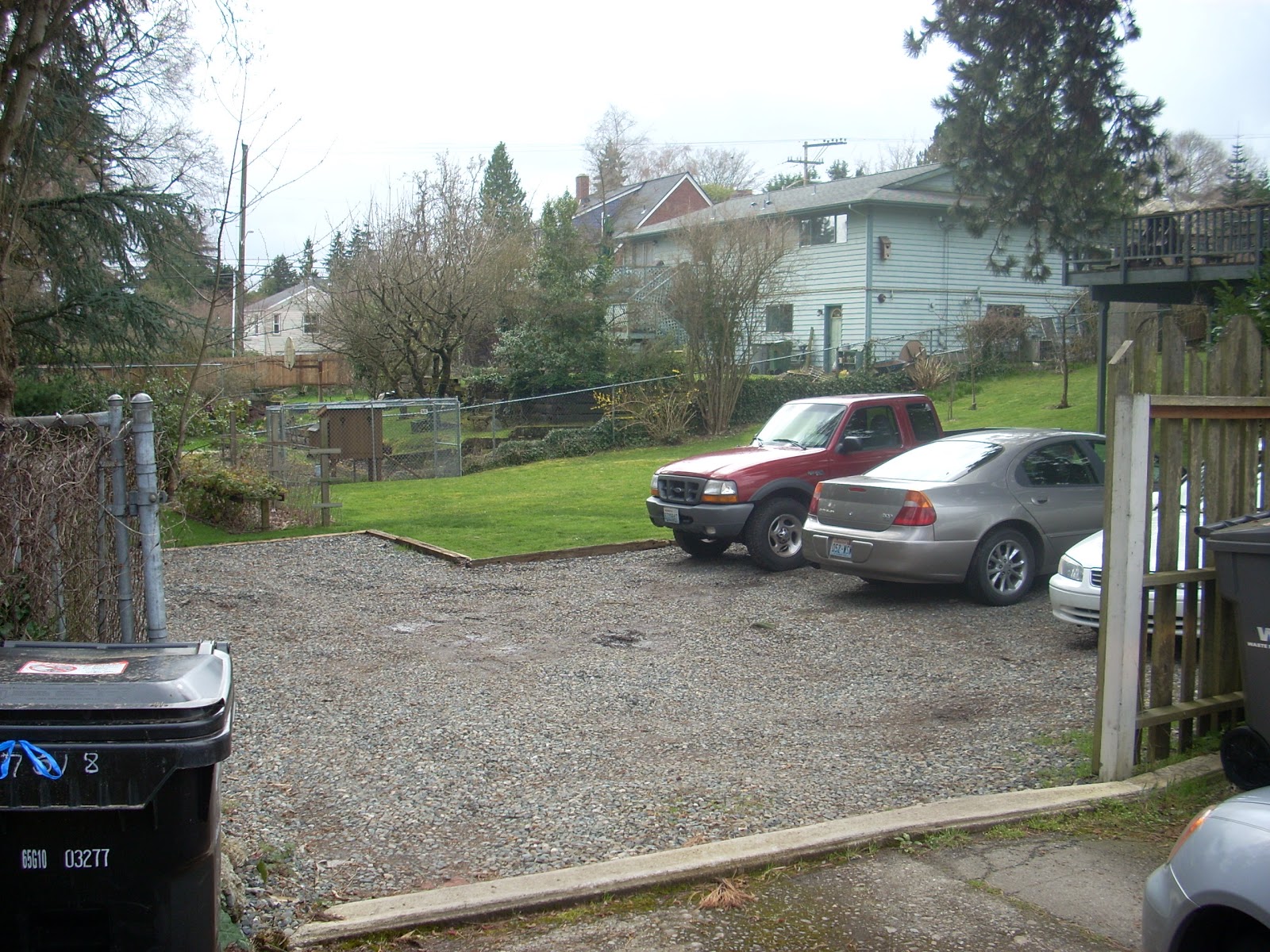
Back of house where camper was
The Walker brothers became suspicious when they noticed the camper door had been locked from the inside and the curtains drawn. Rob attempted to push open the hatch door but it wouldn’t budge. Ron fetched a stepladder, peered through a small window, and saw someone sleeping inside. Rob watched the camper while Ron called 911. Within minutes, several police cars arrived and officers surrounded the camper. They tried to get a response from the person inside, but were unsuccessful. Then, cops pried a louvered window open and emptied two cans of pepper spray inside. Nobody came out of the camper. When they attempted to unlock the door, they heard a single gunshot and dove for cover. Officers responded by firing over 30 rounds at the camper. After all this, cops cordoned off a five-block area, and began evacuating nearby homes. An armored vehicle was brought in and positioned near the camper in preparation for an assault. Hostage negotiators attempted repeatedly to contact the person inside. At 6pm, tear-gas was fired into the camper but still, there was no response. After 20 minutes, more tear-gas was fired. At 7:40, officers in gas masks approached the camper, and opened the door. They found a man lying dead on the floor in the kitchenette, with a 9-mm pistol and one empty shell casing next to his body. He had killed himself. He'd also suffered six more gunshot wounds from the officer's guns, but they were all postmortem. Based on information from Steve Meyers, the FBI served a search warrant on Scott's houses and property in Olympia. They discovered a cache of weapons, which included handguns, a silencer, several rifles, two sawed-off shotguns, and a large amount of ammunition. They also seized over $20,000 in cash, passports, airline tickets, police scanners, and portable two-way radios. Hidden under the floor in the barn, they found a secret room where Scott applied his makeup, stored his disguises, and counted the loot. On Thursday, February 27, 1997 Steve Meyers, 47 and Mark Biggins, 43, plead guilty in federal court to one count of conspiracy, one count of armed bank robbery, two counts of assault on a federal officer, and one count of use of a firearm in commission of a felony. On Thursday, May 15th, both defendants were sentences to 21 years and three months in prison, plus an additional five years of supervised release. Steve Meyers is an inmate at the Forest City Federal Correctional Institution in Forest City, Arkansas. His release date is July 1, 2015. Mark Biggins is an inmate at the Englewood Federal Correctional Institution in Littleton, Colorado. His release date is June 3, 2015. The number of robberies and the amounts stolen, almost 2.3 million, make Scott Scurlock one of the most prolific bank robbers in the history of the United States.