It was December 26, 1985 at 1:07 p.m. when the suspect began to talk, fully aware that a tape recorder was rolling and catching all his words. The investigators believed they had the killer in custody, but this twenty-seven-year-old man with the empty eyes was not what they had expected. What had they expected? How could anyone know what kind of a killer could plot the monstrous crime against the Goldmark family?
 |
| David Lewis Rice, Scum of The Earth |
“Do you know the Goldmarks?” “Only by history,” “History from where?” “Newspaper clippings and so forth. In today’s paper it mentioned that Charles Goldmark was a prominent figure in the Democratic Party. What it doesn’t mention is that he was also a prominent figure in the Communist Party. I found out that he had been brought before the Senate subcommittee on Un-Americanism.” “This Mr. Goldmark?” “Right.” “Charles Goldmark?” David Rice nodded, as if the detectives were woefully uninformed. “Charles Goldmark.… nothing has been done. He was at one time the regional director of the American Communist Party.” “How did you know where the Goldmarks lived?” “A newspaper clipping. It showed that he had just moved into a house on 36th.”
 |
| Goldmark Home on 36th Ave. in Madrona |
Rice said he thought he had read that in an issue of the Seattle Times in March 1983. “You’re talking a couple of years ago, then. Has the Goldmark family been on your mind for some period of time?” “Yeah, I’d say in the last six months.” David Rice said he had to get himself mentally set to do what he planned to do. “What were you going to do?” “I was going to kill the Goldmarks.”
 |
| The Goldmark Family Hiking In The Cascade Mountains |
By mid 1985 Rice decided he had to kill Charles Goldmark. He believed that Goldmark was both a Jew and a Communist. In actual fact, Charles Goldmark was neither. But to David Rice, Goldmark represented the enemy. Rice’s first reason for destroying Goldmark had been political, but he had some financial reasons too. “I assumed that he would have an amount of cash on him. I didn’t know how much, but it would be enough to get me by. I took a toy pistol.“ "When was it, when you bought the toy pistol?” “That was Christmas Eve.” He had also bought two pairs of handcuffs at a Big 5 Sporting Goods store, four months prior. He stuffed the gun, the handcuffs, a pair of gloves, two rags, and two bottles of chloroform in the pockets of his green parka. He then took a bus to the Goldmark’s neighborhood. He had only taken two bottles of chloroform and two rags, he explained, because he expected to confront only two people: Mr. and Mrs. Goldmark. “How did you know you had to take a certain bus to get to the area where the Goldmarks lived?” “I had been there twice before. The first time was, I believe, about the first of November. I went there just to see what kind of house it was and just check out the neighborhood.”
 |
| Sally and John Goldmark |
Detectives soon realized that Rice had meant to kill Sally and John Goldmark, Charles' parents, who were both dead. His plans had been wrong from the start. Sally and John Goldmark were not communists; their son was even further removed. David Rice had set out to kill the wrong people for the wrong reasons. Rice said he had no idea what Charles Goldmark or his wife looked like. He had returned during the first week of December, again by bus, hoping to peek in the windows to see what Goldmark looked like, but the house was dark. He did go around to the back of the residence to see that there was an alley and a garage there. He saw there was no handle on the garage door and realized he had no easy entry.
 |
| The Garage Today. Still No Handle. |
Rice then continued filling in the gaps of what had happened on the 24th. He recalled that he had walked up to the Goldmarks’ home a few minutes after seven. He knocked on the door, and a young boy answered it.
 |
| Crime Scene Photo of Front Door |
“I was surprised, because I assumed that there were only two— Charles Goldmark and his wife— but I went ahead and I said, I’m from Farwest Cab, and I have a package to deliver for Charles Goldmark, and so he called him. Charles came downstairs.” Rice pulled out the toy pistol he had hidden behind the box. “I flashed it in front of him and I grabbed him by the shirt and turned him around and told him to get down on the floor. The boy ran out. He ran into the kitchen.” Rice kicked the front door shut behind him. He held Charles Goldmark down on the floor just inside the doorway.
 |
| Estately.com |
“I told Mr. Goldmark to call his son and he did and so he came in, and I took them upstairs.” “Why did you decide to go upstairs?” “I asked him, Where is your wife? and he said, Upstairs in the shower, and so I said, Let’s go upstairs.” Then he marched the man and the boy up the stairs, the realistic-looking gun pointed at their backs.
 |
| Estately.com |
“He asked, Do you want money? and I said, Yes, I can use all you got, and he said, I don’t have much. He showed me there was fourteen dollars and some change. And we got upstairs and he said, Honey, could you come out here? and she said, What? and he knocked on the door. He poked his head in the bathroom door and said, Put something on and come out here, and so she put on a robe and came out. That's also when I noticed the second boy” Rice then ushered everyone in front of the bay window in the master bedroom.
 |
| Estately.com |
“I told everybody to get on the floor face-down and had them face away from me so that they couldn’t see that it was just a toy pistol. Then I handcuffed Charles and his wife. I had to stop for a minute. I was getting a little rattled because there were two kids, and so I stopped and thought and then I just figured, I’m in it now. I can’t stop.” Charles told him they were expecting company at 7:30. It only made Rice work faster. He poured Chloroform on a rag and pressed it to each Goldmark's nose until they became unconscious. Both vials were empty, and the family lay still. Only about ten minutes had passed since Rice had entered the home. He glanced at his watch and figured he had five or ten minutes before the company arrived. “First I went downstairs into the kitchen, and I was looking for a knife. I found a filleting knife. It was in the drawer right next to the island."
 |
| Estately.com |
"What I was looking for was one of those meat hammers.” “Why?” “I didn’t like the idea of using a knife.” “You wanted to beat as opposed to cut?” “Right.” But Rice had no luck looking for a hammer and went down the basement steps. “I found an iron…a regular clothing iron.” Rice ran upstairs. When he reached the master bedroom he found all four victims still in the same positions, still unconscious. "And so I took the iron, and I hit Mr. Goldmark on the back of the head. I think I hit him about four or five times. Then I hit Mrs. Goldmark. I hit her on the side of the head, and she started moving. I figured the chloroform was starting to wear off, so I hit her a couple more times, and then she stopped moving. He repeated his brutality on the children and after detecting a pulse on both Charles and Annie, he stabbed all four victims repeatedly. Annie Goldmark died there. The other three were hanging by a thread. It was time to leave—to get out of there before the partygoers arrived. It was almost twenty minutes past seven. “I was looking for the back door, which I didn't find for quite a while. It took me about three minutes to find the back door, down in the basement. As I was leaving I turned out all the lights.” He went through the steel-covered door in the basement, through another small room, and out a set of glass doors. David Rice was outside. He was out and down the walkway, turning the knob to open the back gate to the alley.
 |
| The Gate |
He didn’t dare take a bus; he walked. It was a long way, over two miles, but he knew his clothes were too stained with fresh blood to risk taking a bus. “But about halfway there I realized that I’d forgotten my handcuffs—so I went home and changed clothes and put the stuff down in the basement and went back over there.” “To the house?” "Yes." Incredibly, he returned to the scene of his crime. Rice said he had taken a cab to 26th and Union and then walked back to the Goldmark house, arriving between 8:30 and 9:00. He had thought the victims might not have been discovered yet. He walked along an ivy-clotted bank across the street from the Goldmark house, watching. “I heard police radios and so forth, and so I just kept walking."
 |
| Police Tape at The Crime Scene |
"I didn’t see a police car. There were a few lights on in the house, though, and I assumed that, you know, that it had been discovered. I thought well, I’m caught now. They’ve got my fingerprints on those handcuffs.” The second time David Rice left the Goldmark home he stopped at a market and bought a tablet, (the same tablet he would write a confession on) soda, and a candy bar. After wandering around downtown on Christmas day, he went to the home of Max Stingley, an acquaintance who lived in an apartment on Capitol Hill.
 |
| The Undre Arms Apartments Have Been Demolished |
When Stingley heard a knock on his door he was a little surprised to find a man he knew only as David . He knew David as a member of a group he belonged to called the Fox Club. David had always been pale with dark circles under his eyes, but on Christmas night he had really looked wasted. Stingley was tired himself and told his impromptu guest that he was going to bed. It was what Stingley found on the coffee table before dawn the next morning that made him nervous enough to call the police. He had seen the kid scribbling on a tablet the night before, but he couldn’t figure out if the scrawled words were supposed to be true or some kind of creative writing. Whatever it was, it made the hairs stand up on the back of his neck.
TO WHOM IT MAY CONCERN, I AM THE PERSON YOU ARE LOOKING FOR IN THE GOLDMARK CASE. I KNOW WHAT I DID WAS A VERY TERRIBLE THING. THAT IS WHY I AM AS YOU SEE ME NOW. I WANT IT PERFECTLY UNDERSTOOD THAT NO ONE ELSE HAD ANYTHING WHATSOEVER TO DO WITH WHAT I DID. I WENT TO GREAT LENGTHS TO MAKE SURE OF THAT. THE PERSON THAT I LIVE WITH DOESN’T EVEN KNOW THAT I AM WANTED ON A DIFFERENT CHARGE. SHE RECIEVED A COUPLE OF MESSAGES ON HER MACHINE, BUT I ERASED THEM BEFORE SHE GOT TO THEM. I DID NOT USE THE RIFLE THAT I PURCHASED A FEW WEEKS AGO. INSTEAD, I FOOLED THEM WITH A TOY PISTOL WHICH YOU WILL FIND IN THE STORAGE LOCKER. I THREW THE RIFLE AWAY A COUPLE OF WEEKS AGO. AGAIN, I WANT IT UNDERSTOOD THAT NO ONE KNEW ANYTHING ABOUT THIS, SO PLEASE DO NOT CAUSE ANY UNNESESSARY SUFFERING TO INNOCENT PEOPLE. I THINK THAT I’VE ALREADY DONE ENOUGH. I GUESS I SHOULD TELL YOU WHY I DID WHAT I DID. THAT WAY, YOU WON’T HAVE TO ASK OTHER PEOPLE ABOUT IT. MY LIFE IS A MESS. IT HAS BEEN SINCE MY WIFE LEFT. SUE HAD BEEN TRYING TO HELP ME STRAIGHTEN IT OUT BUT…
Max Stingley had never heard the name Goldmark. What with the holiday and all, he hadn’t read a paper for a couple of days or had the TV news on. He read the note again, glanced at David, who was still asleep, and puttered about making coffee while he decided what he should do. His guest woke up and was sitting on the couch watching television when Stingley said he was going out to get a pack of cigarettes. Stingley crossed the darkened street to a club he belonged to at 11th and Union. Still troubled, he asked a few early birds there if they had heard about some shooting or something having to do with a Goldmark. They looked at him, astounded. Everybody in Seattle must surely know about the Goldmark attack by now. Where the heck had Stingley been, they asked. Somebody held up the front page of the morning paper for December 26th. The name Goldmark was spread all over it. Stingley felt sick. The note he had found on the table in his apartment wasn’t fiction at all. He had just slept through the night with a probable killer in his apartment.
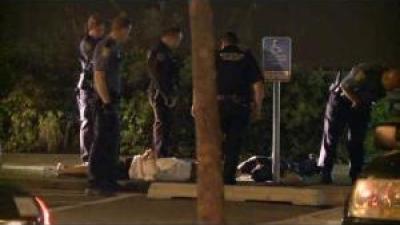
Rudy Sutlovich had arrived to work the day shift in Homicide shortly after 7 a.m. on December 26th. There was no one there except the two secretaries. The phone rang, and Sutlovich reached for it; it was Elizabeth Eddy, the chief radio dispatcher. “I’ve got a citizen on the 911 line who says his name is Max Stingley— he’s at 11th and Union. Says he’s got a guy watching TV in his apartment who says he killed the Goldmarks. What should I do?” “Get a uniform up there, I’m leaving right now.” Sutlovich and Detective Sonny Davis headed up the hill toward Broadway. By the time they reached Boren and Madison they could hear sirens, and the radio picked up sounds of a foot chase nearby. Stingley had been talking to the uniformed officers in front of his club when his guest happened to glance out the window and see the conference. David deduced correctly that they were talking about him. He realized that Max must have found the note. He ran out of the apartment building and headed north on 11th Avenue. Stingley saw him and pointed him out to the officers. After a brief chase around the block, Rice was arrested and read his rights.
Rudy Sutlovich had arrived to work the day shift in Homicide shortly after 7 a.m. on December 26th. There was no one there except the two secretaries. The phone rang, and Sutlovich reached for it; it was Elizabeth Eddy, the chief radio dispatcher. “I’ve got a citizen on the 911 line who says his name is Max Stingley— he’s at 11th and Union. Says he’s got a guy watching TV in his apartment who says he killed the Goldmarks. What should I do?” “Get a uniform up there, I’m leaving right now.” Sutlovich and Detective Sonny Davis headed up the hill toward Broadway. By the time they reached Boren and Madison they could hear sirens, and the radio picked up sounds of a foot chase nearby. Stingley had been talking to the uniformed officers in front of his club when his guest happened to glance out the window and see the conference. David deduced correctly that they were talking about him. He realized that Max must have found the note. He ran out of the apartment building and headed north on 11th Avenue. Stingley saw him and pointed him out to the officers. After a brief chase around the block, Rice was arrested and read his rights.
It was almost three in the afternoon on the day after Christmas. Sonny Davis stared at David Rice. “Okay— we’re getting close to wrapping up this session. For the purposes of this interview, do you have any remorse or sorrow or feeling about what you did to the Goldmark family?” “The children. I didn’t expect them there, and I wouldn’t have been there if they had been.” “You’re sorry about the children?” “Yeah.” “Did it ever occur to you to just say, Okay—they’re down and out; let me turn on my heel and walk out of this house and forget it?” Davis asked. “They had already seen me. It was too late.”
 |
| Colin and Derek Goldmark |
Colin Goldmark died on December 28, 1985. Charles Goldmark died on January 9, 1986. Derek Goldmark died on January 30, 1986. They were all gone.
David Lewis Rice’s trial began in May 1986. On June 5, 1986, the jury of six men and six women took less than five hours to reject Rice’s insanity plea and find him guilty of four counts of first-degree murder. On June 10th the jury announced that they had agreed that Rice should be put to death. Then, on August 6, 1993, U.S. District Court Judge Jack Tanner threw out the death penalty after finding Rice's defense by attorney Bill Lanning to be ineffective. Lanning had allowed the police unlimited access to his client and did not introduce evidence of Rice's psychotic state. In May 1998, Rice agreed to plead guilty in exchange for avoiding the death penalty. Rice was sentenced to life in prison without possibility of parole.

"THIS OVERLOOK IS NAMED IN MEMORY OF CHARLES, ANNIE, DEREK AND COLIN GOLDMARK WHO LOVED SEATTLE AND ITS OPEN SPACES."
In April of 1992, the Goldmark family was remembered by a plaque showing a mother and father and two young sons walking along Lake Washington with Mount Rainier in the background. It's on a decorative wall at Madrona Drive and Lake Washington Boulevard.
RIP